What does a pre-Columbian statuette have to do with the angel’s wings painted by Fra Angelico?
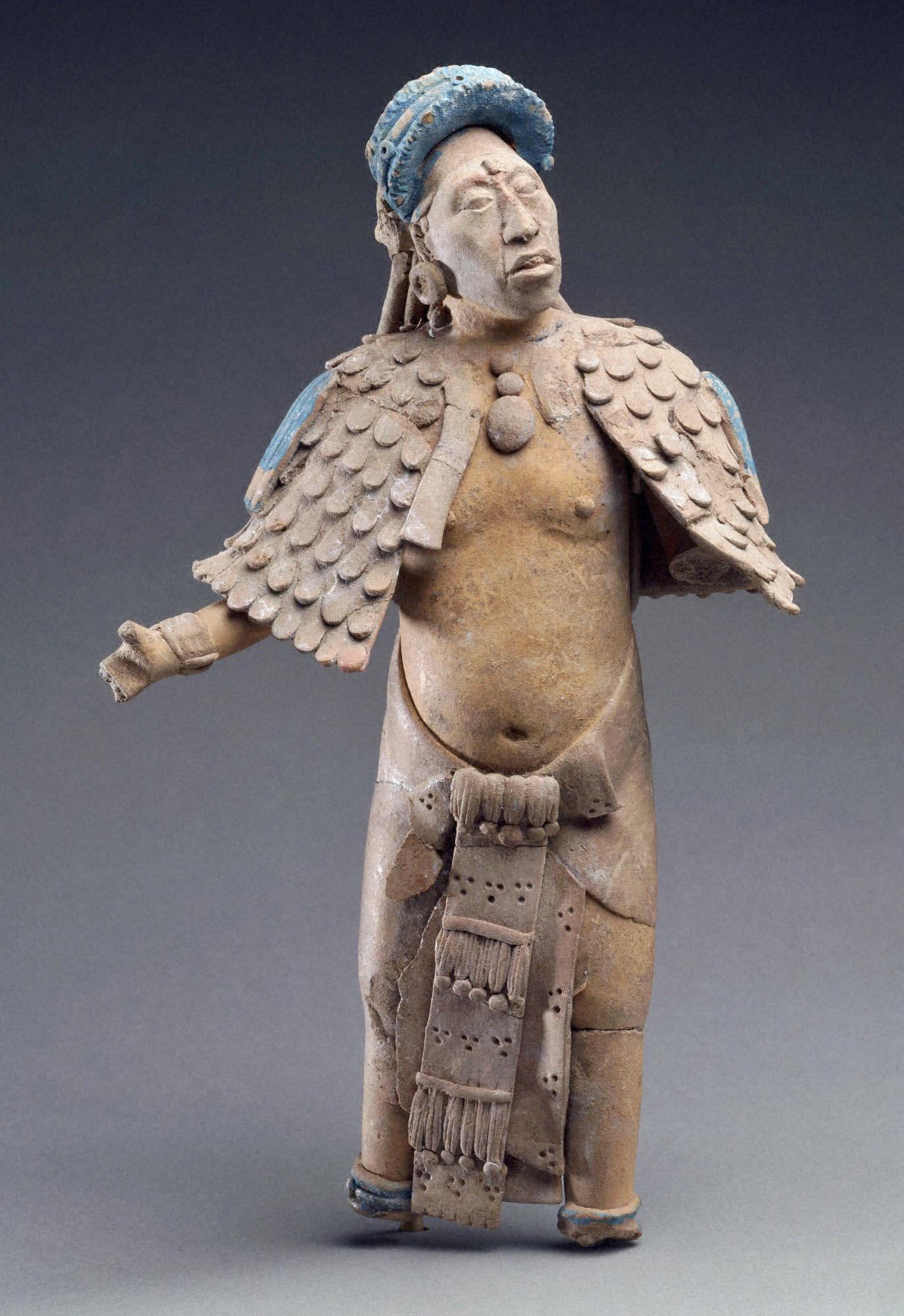
It was a December, many years ago, I was seven years old, when I discovered the most exciting object my heart had ever seen: a pre-Columbian figurine. It represented a Mayan royal dignitary, from the “Jaina” style (600-900 AD). My mother had taken me to see a temporary exhibition of Mesoamerican pre-Columbian art at the Archeological Museum of Bogotá. The texture of its feathered garment fascinated me; something inside told me it was a “desire for aesthetic expression”, but at my age I didn’t know how to explain it.
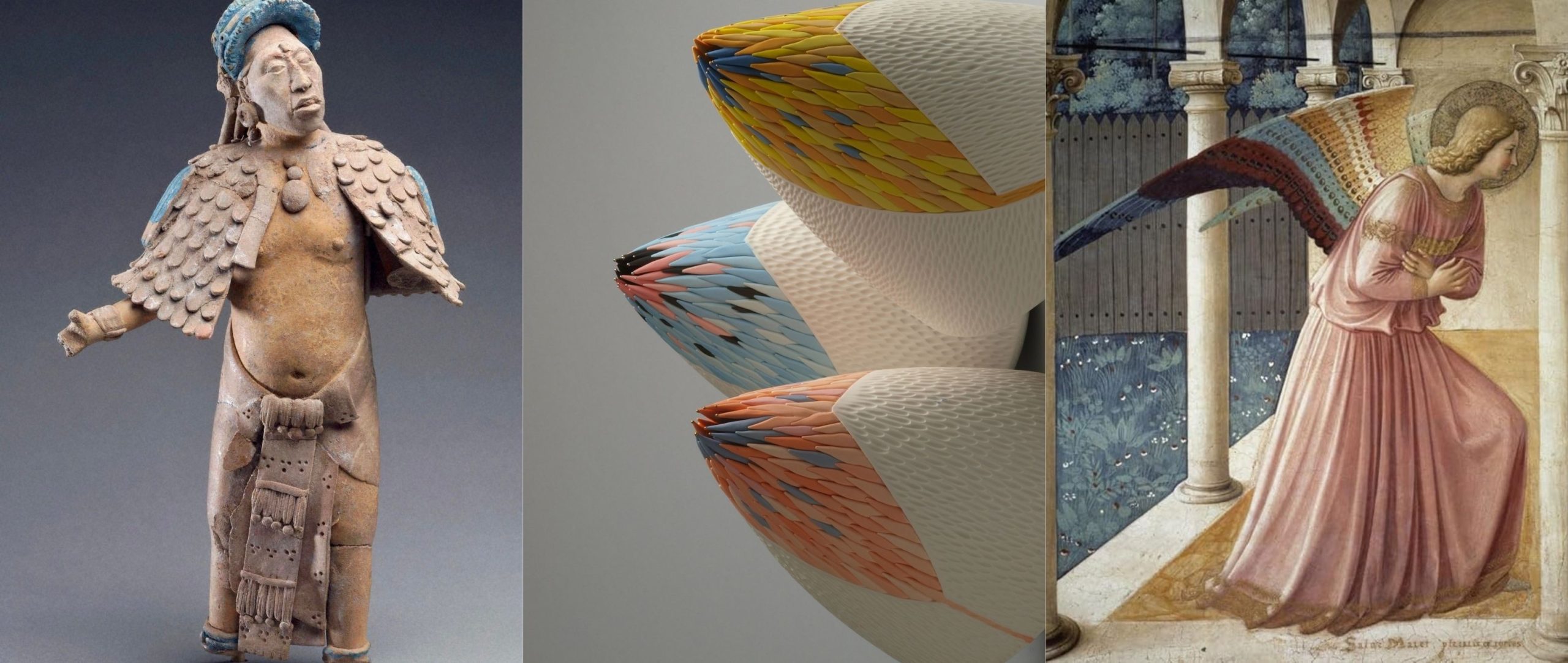
Fifteen years later, the same “visual emotion of the heart” returned: I chose a Quattrocento painting, for a university assignment during my stay in the city of Neiva, Colombia. The desire for aesthetic expression is repeated: The wings of the angel painted by Beato Angelico in the “Annunciation” recall the texture of a South American tapestry, the texture of a tropical bird’s plumage, they evoke the clothing of my noble Mayan character. Fra Angelico represented “divine beauty,” and for me, the Mayan figure represented “ancestral beauty”.
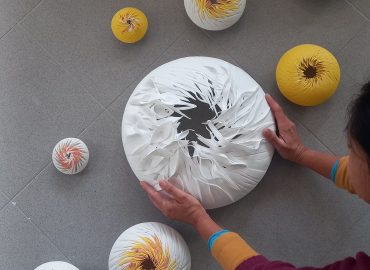
Some years later in Italy, perhaps unconsciously, I put that “desire for aesthetic expression” into practice, combining divine and ancestral beauty in the skin of my porcelain sculptures.