Blue, like an ancient spell, has been much more than just a color since time immemorial. It is the promise of calm amidst a turbulent world, the endless gaze of the sky, the distant echo of deep waters. Yet, behind its serenity lies a complicated story, filled with secrets, overflowing passions, and journeys that cross continents. Through its different shades, blue has been a mirror of the most complex human emotions, a silent witness to eternity, yet also the most expensive color humanity has ever known.
Blue was born in ancient Egypt, around 2200 BC, when the alchemists of the desert created the first blue pigment from humble materials, yet laden with mysticism. From there began its journey, one that would grant it a value greater than gold during the Middle Ages and the Renaissance. Through the hands of artisans, it traveled in endless caravans crossing burning deserts, facing pirates and bandits, passing through Persia and the Middle East until it finally arrived in Venice, the city of canals, the Serenissima, the jewel of Europe. There, lapislazuli, extracted from the mines of Badakhshan, in what is now Afghanistan, was transformed into a celestial powder full of mystery. To paint with it was like tracing the footsteps of the gods on the canvas.
Venetian artists, often envied by their contemporaries, took on the task of unraveling the secrets of this divine blue, which was reserved only for the most sacred. The Virgin’s robes, the endless skies, and celestial spaces were filled with this color, while the hands of Giotto, Vermeer, Tintoretto, and Tiziano immortalized the history of humanity in their frescoes. It was the color of the infinite, one that could not be obtained without the help of powerful patrons, and still, only the wealthiest could afford the astronomical costs of ultramarine. The others, those who could not afford such luxury, settled for a duller blue, citramar, or the cobalt blue, a color that, like a fleeting dream, faded with time.
But while Europe debated on the proper shade of blue for this or that masterpiece, on the other side of the ocean, in my homeland, pre-Columbian cultures had already claimed this color as their own, a turquoise blue known as the “Maya Blue.” Extracted from the indigo plant and mixed with special clays, the ancient indigenous alchemists managed to stabilize it chemically. The result was a magical formula that allowed the Mayan temples, still lost in the jungle today, to preserve vibrant frescoes of an astonishing blue. And not only in America— in Asia, centuries before Europe knew the secret of lapis lazuli, indigo blues were woven into the threads of textiles and captured in the ancestral techniques of Shibori.
Time, however, did not stop. Synthetic blues arrived, like Prussian blue in the 19th century, and chemical blues, like Klein blue and phthalocyanine blue, intended to fill the walls of grand installations.
For artists like Giotto, blue was the color of the divine. For Picasso, during his “Blue Period,” it symbolized sadness, misery, and despair. For Van Gogh, blue was a mixture of conflicting emotions: calm and melancholy, stillness and movement. Yves Klein, with his famous “International Klein Blue” (IKB), gave blue a philosophical dimension, turning it into a vehicle to explore the human condition and its existential conflicts.
However, blue is not just the heritage of the great masters. In my South American land, blue is part of our everyday life. It is a color that runs through the rivers and lagoons, reflected in tropical birds and vibrant-colored insects. In the highest zones of the Andes or on the Caribbean coasts, the sky and sea merge into a single endless expanse of blue.
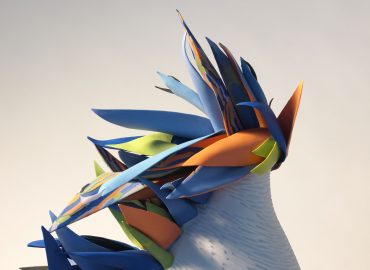
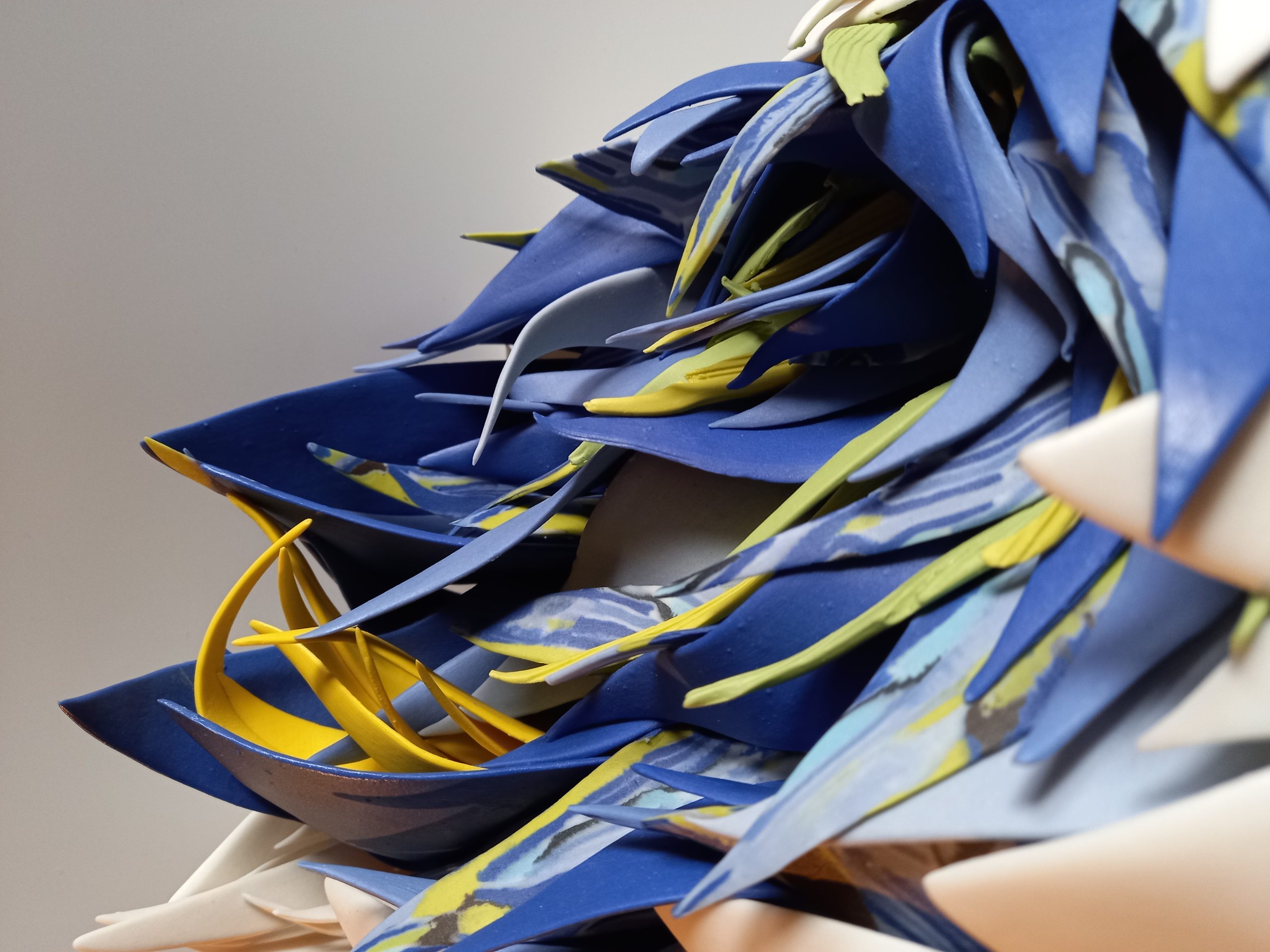
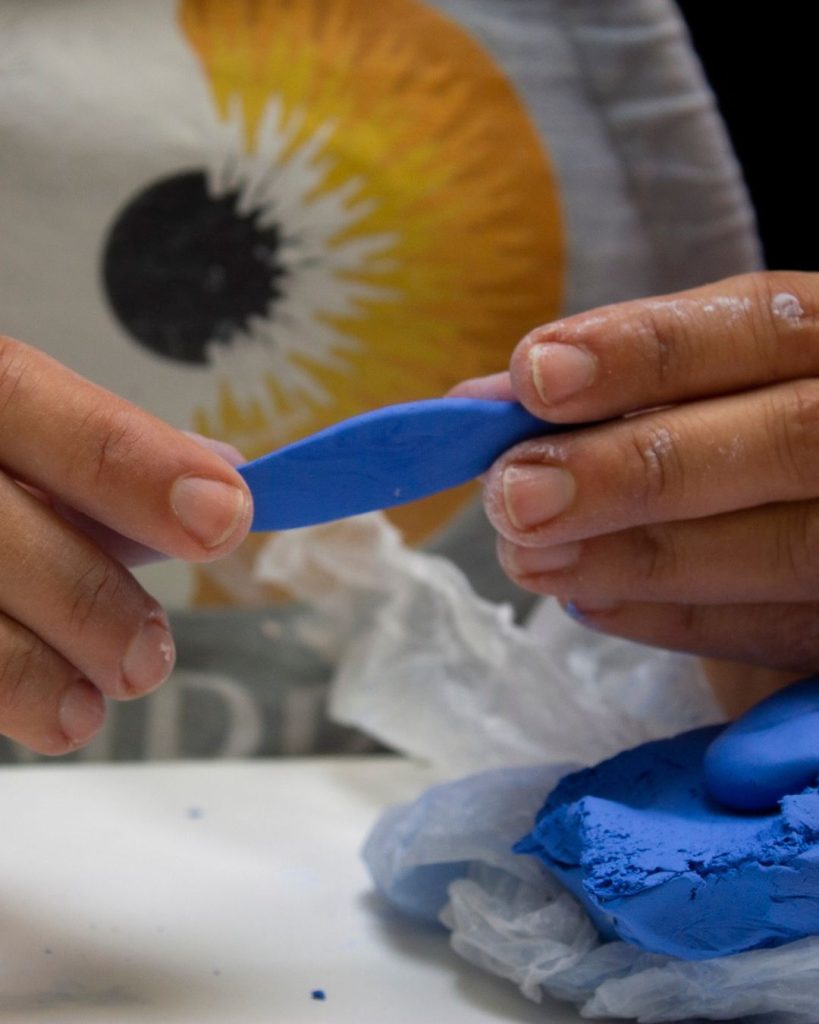
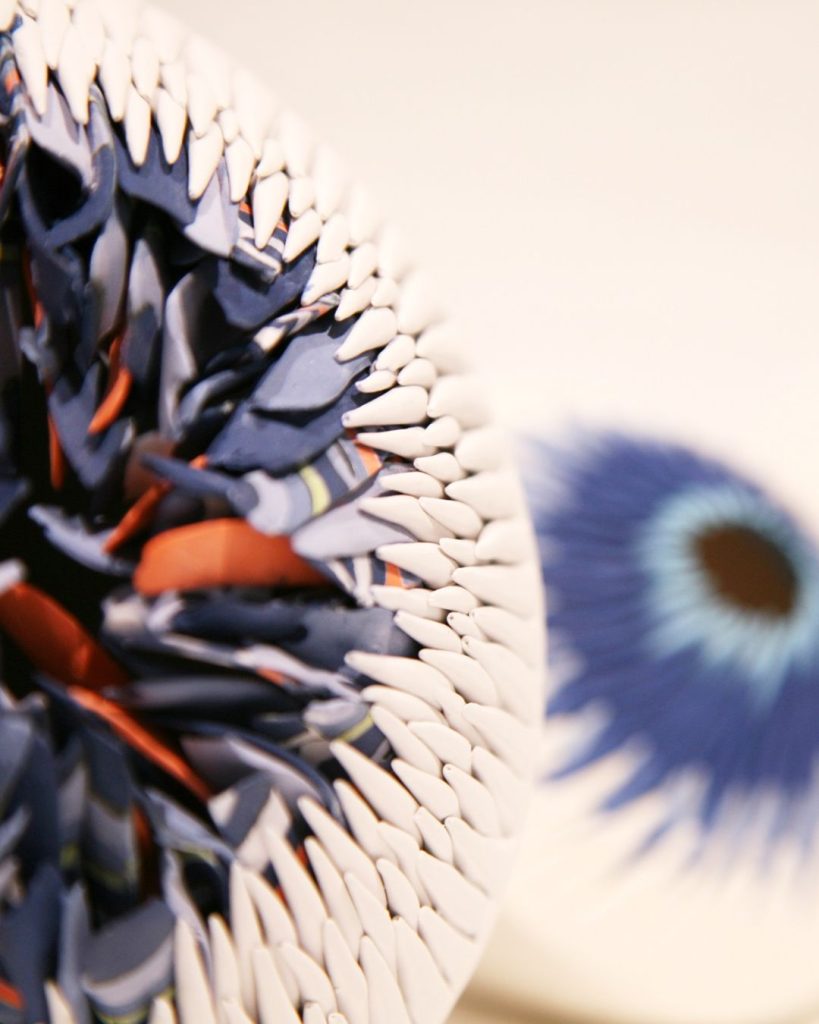
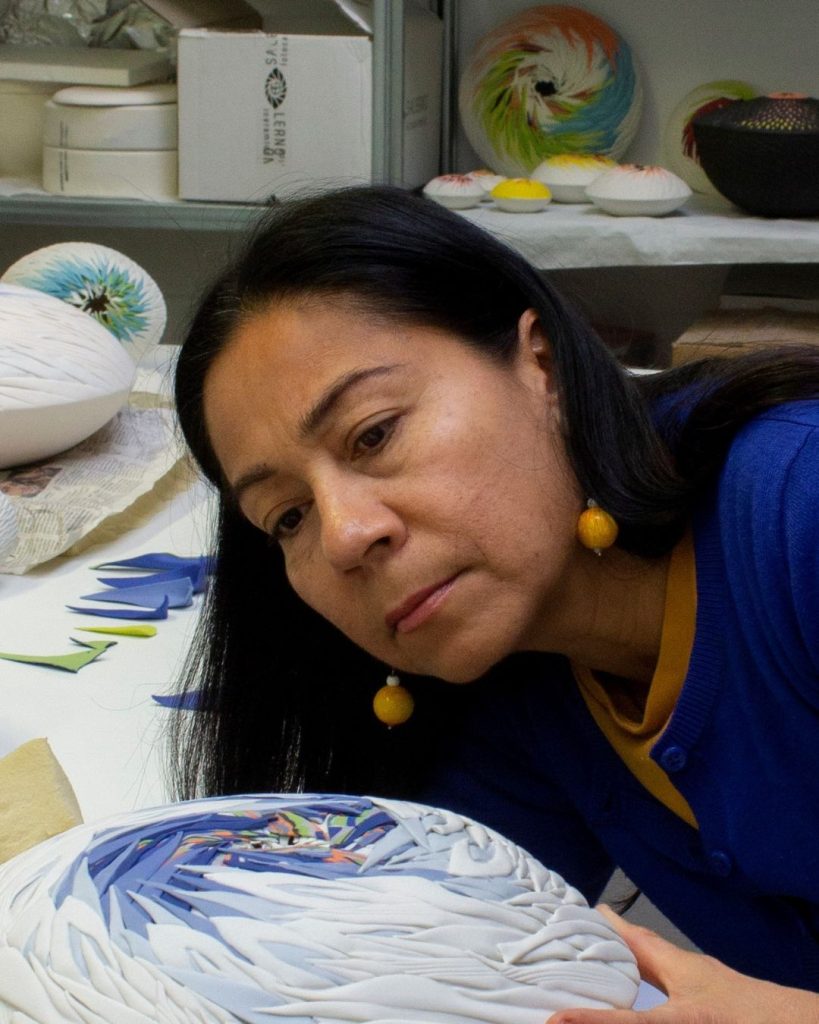
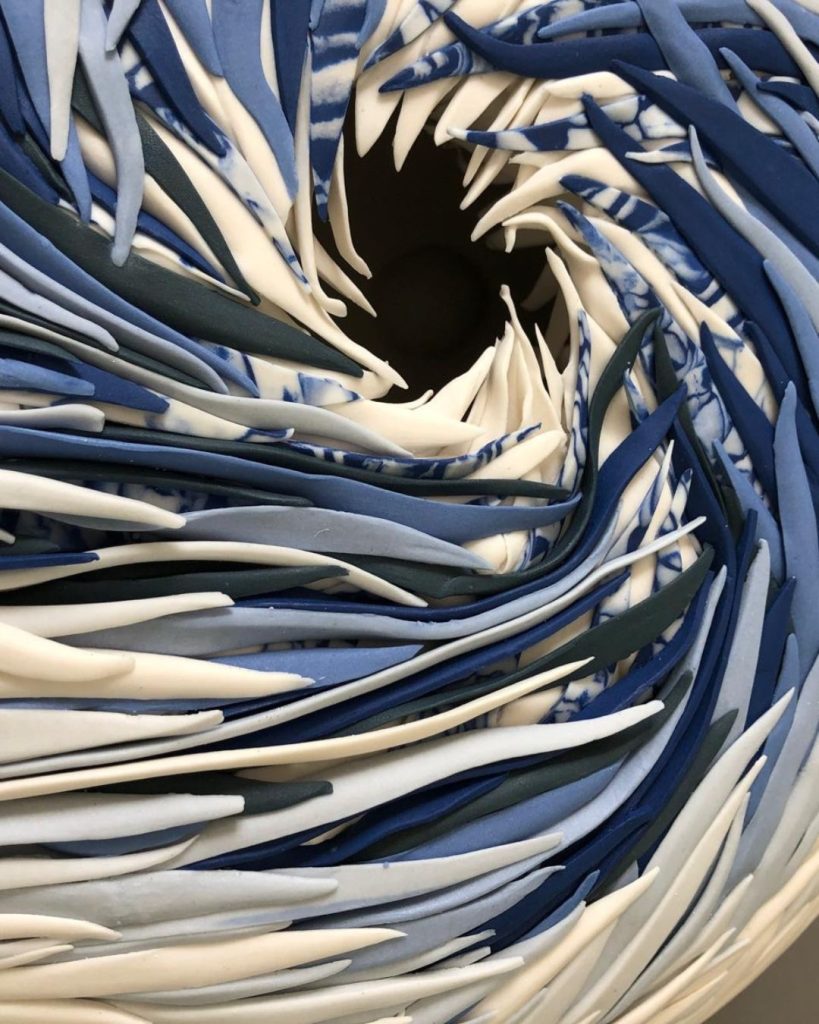
I remember that when I arrived in Europe, my suitcase was filled with yellow, the color that always accompanied me. But it was the Mediterranean, with its blue so pure, so intense, that made me fall in love with this color. I saw it reflected in the waters kissing the Italian shores, in the vast stretches of the sky, and little by little, it began to infiltrate my work. In my art, I have noticed that colors, like cultures, have their own soul. Italians, for example, are the ones most drawn to my blue sculptures, while in Northern Europe, they prefer other shades. Asian collectors seek different tonalities, and in North America and the Middle East, blue has a particular resonance, tied to their history and culture. But that is another story… one that I may tell another time.