Despite the many digital tools that seemingly simplify and speed up processes; despite the best 3D models, multiconverters, digital editors, and thousands of ready-to-work models and sketches, none of them compare to the efficiency of two ancient and anonymous tools: PAPER AND PENCIL.
Pencils are the heroes of art, like the painter’s brushes, the sculptor’s chisels, or the photographer’s camera. Paper, too, has no equal: the perfect companion anywhere; it doesn’t need a battery or electrical cord, it’s portable, lightweight, and allows you to capture inspiration wherever it strikes.
In my studio and at home, there are pencils and paper in every room. If I need to quickly explain an idea to a collaborator in 10 seconds, I don’t go looking for a computer or cell phone. With a few strokes of pencil on paper, I get everything done. If we’re talking about a project, with an open computer, with ready-made digital designs, and we need to define or change a technical process, my collaborators and I are sure to solve it quickly with paper and pencil.
These two tools come to my aid when a client is in the studio and wants a quick initial idea of how and what to install in their space. Obviously, for special projects, we move to a digital definition. But a quick sketch based on a first intuition requires only paper and pencil.
Shapes, colors, tones, textures, precise technical details, as well as my handwritten texts, for every bodywork I’ve done, for those in progress, or for bodywork projects planned for the future, are all done with paper and pencil. All arranged in large or small notebooks, from 1998 to the present. They’ve been made in my bed, in the kitchen, during trips, on a beach, on a mountaintop, on a plane, on a train, or in my studio.
A digital tool couldn’t have made it so easy for me. Is it because I was born in the last century? I recognize, however, that digital tools come later for communication and marketing.
At the same time, during the technical process, tools are used for specific actions and specific results. In my case, when using porcelain, I look for the highest quality, regardless of price, or I also opt for alternatives from the world of cooking, metal or wood sculpture, bodywork, dressmaking, and ceramics.
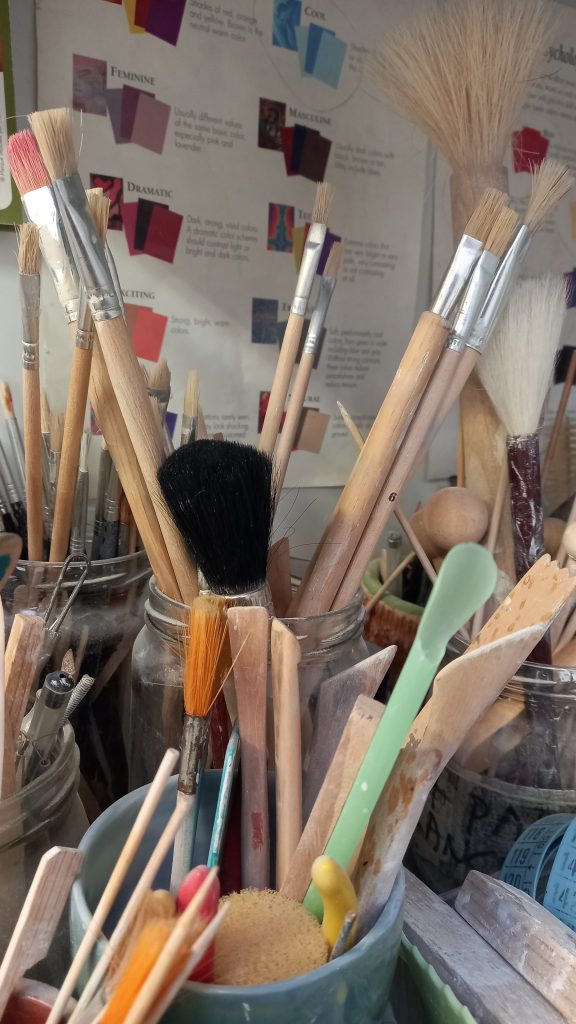
The protagonists of my processes still need to be mentioned: THE BRUSHES.
No one would think so; they are my most used sculpting tools and are abundant in the studio. The coarsest ones made of vegetal fibers are used for modeling; the softest ones define and refine shapes. Some large and thick ones are used for cleaning. Others, fine and very soft, are used for small touches of glaze, gold, or platinum.
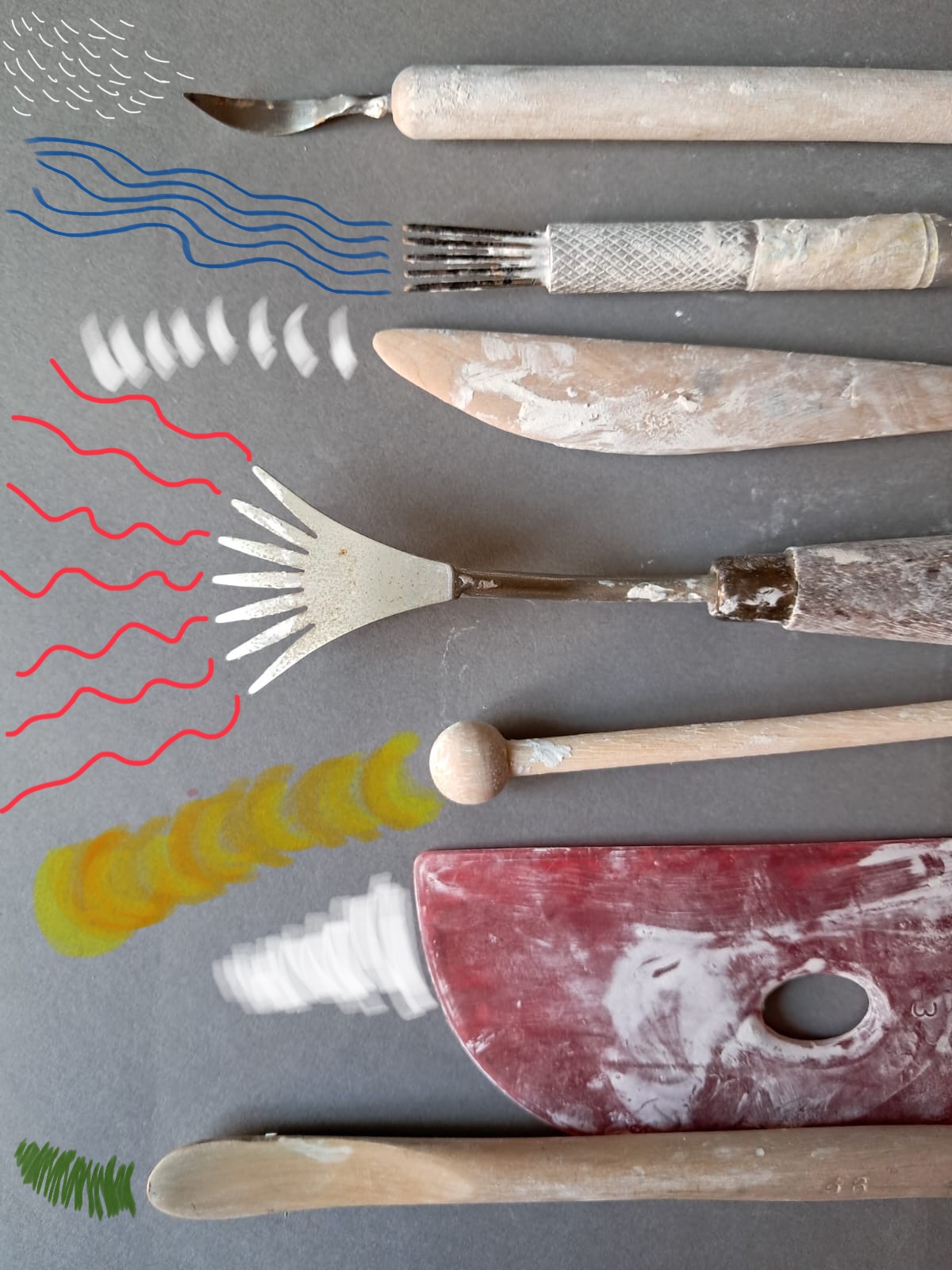
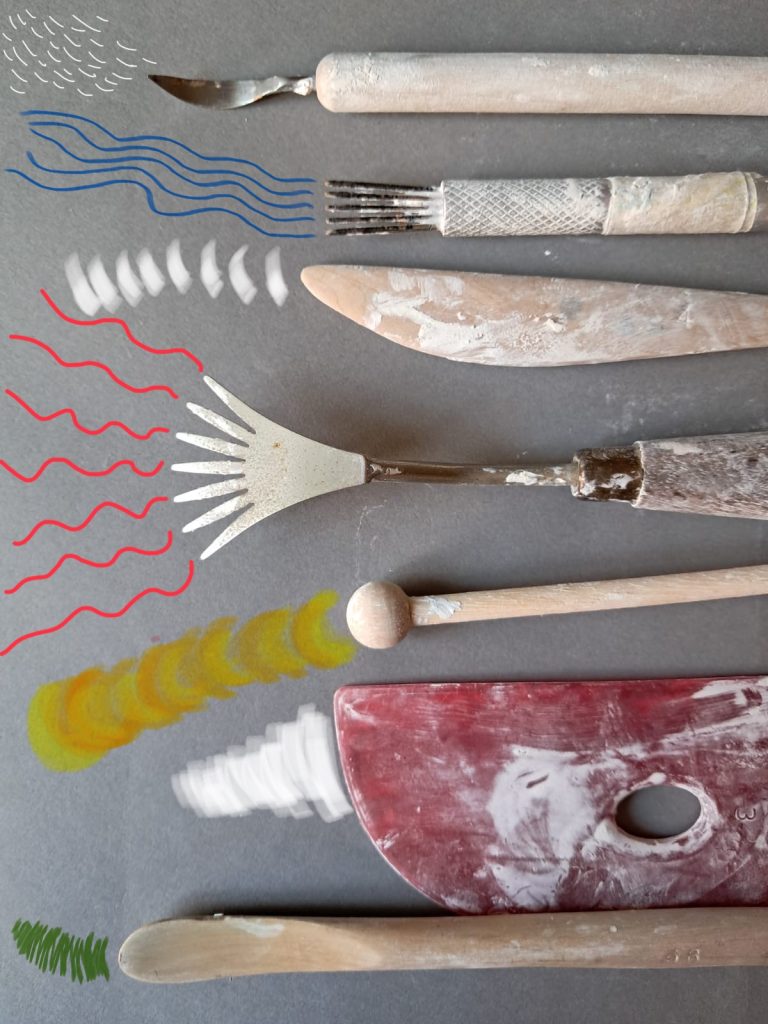
In my process, I use some metal tools to add textures (video) or to create unique surfaces. And finally, the movil phone and computer are the tools I must use. I don’t like them, but I’ve learned to use them in a healthy way.
I did a study of the time I spent with both tools; it was 6 hours a day!
That’s 90 days a year of my life!
By stopping using them, especially my movil phone, and taking periods of complete abandonment of them, I have recovered mental and physical benefits: my skin is healthier, the bags under my eyes have disappeared, my vision is more relaxed, my digestion is perfect, and I no longer have neuralgia in my neck or back.
Life should be more real and less digital.
After all, the best tool is the human hand, commanded by a happy brain and heart!