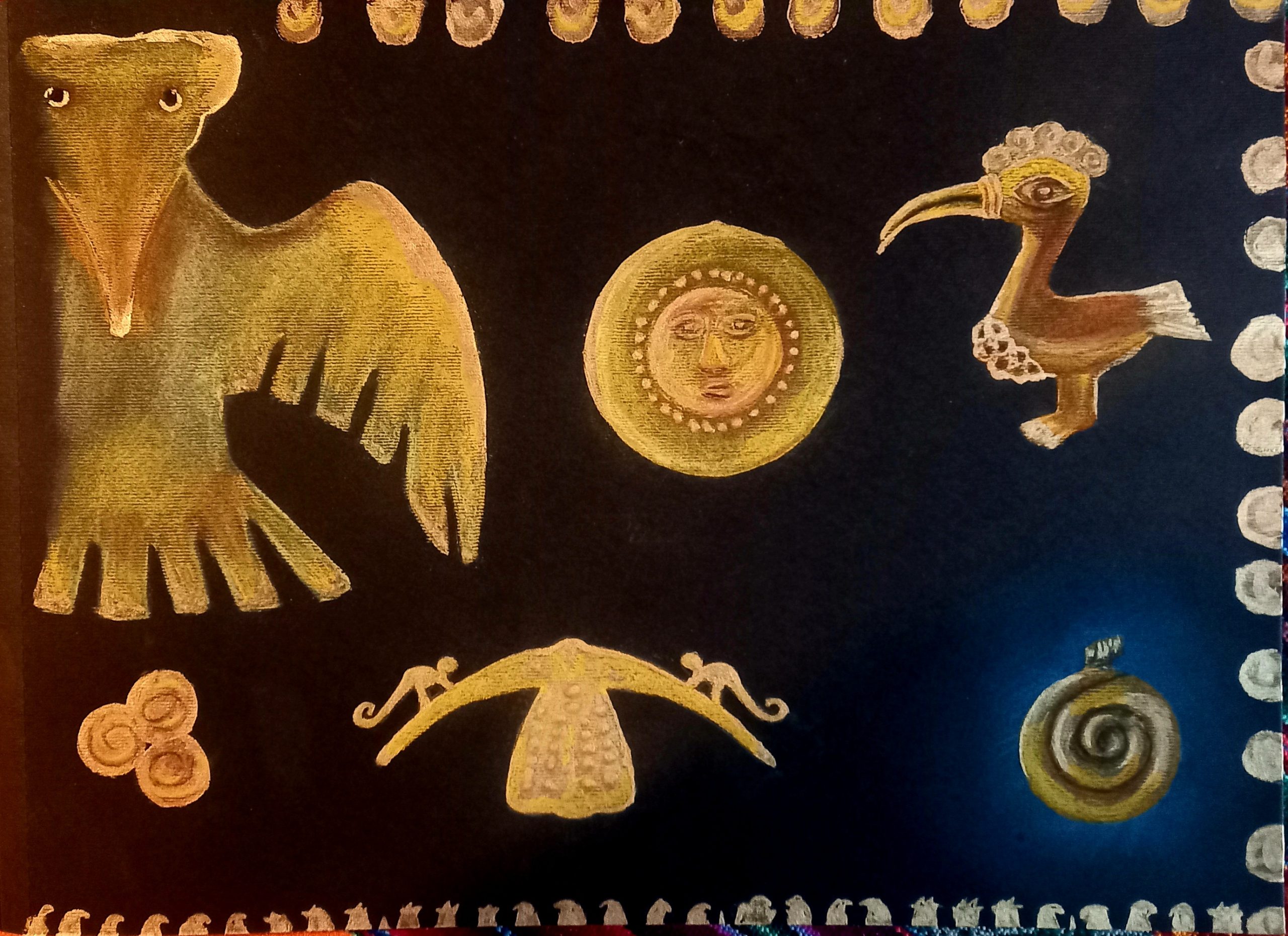
GIOVANNA PELLICONI, Italian designer and illustrator.
Albrecht Dürer was amazed by the objects that Moctezuma sent from Mexico to Charles V in 1520. “I saw, then, the things brought to the king from the new golden land, a sun all of gold, as wide as an arm, a moon, as large and all of silver…. And all kinds of wonderful things. These things are so rare that they have been estimated at a value of a hundred thousand florins, and in all my life I have never seen anything that so gladdens my heart.”(1)
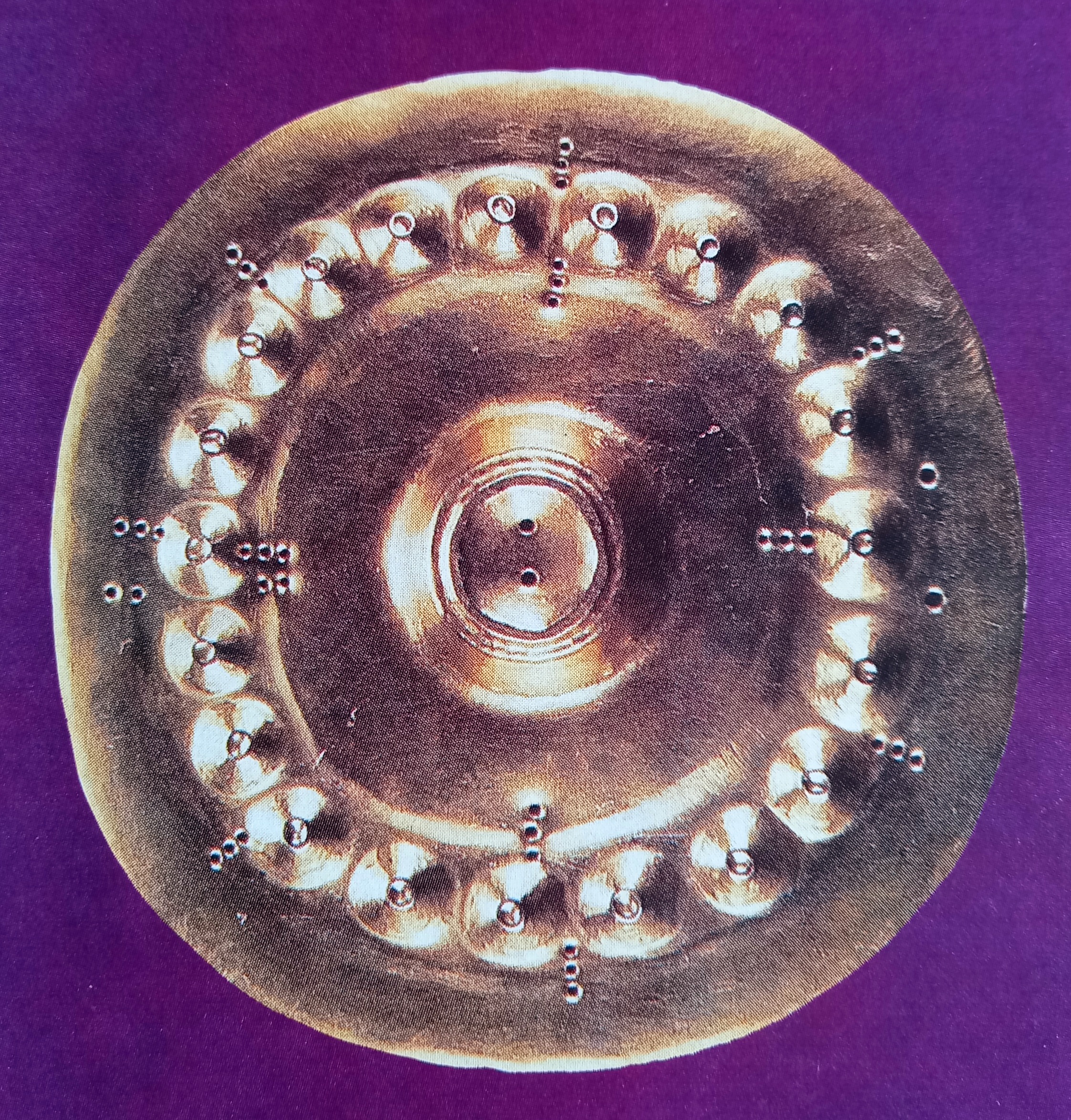
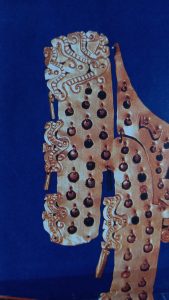
Gold pectoral. Pre-Columbian treasure, Colombia
Years before Albrecht Dürer’s captivating visual spectacle, a priest of the Muisca tribe prophesied that one day the Sun would reincarnate as the son of a virgin. Several days went by before the belly of Zipa’s daughter (2) began to grow. After nine moons, Goranchacha (the son of the Sun) was born.
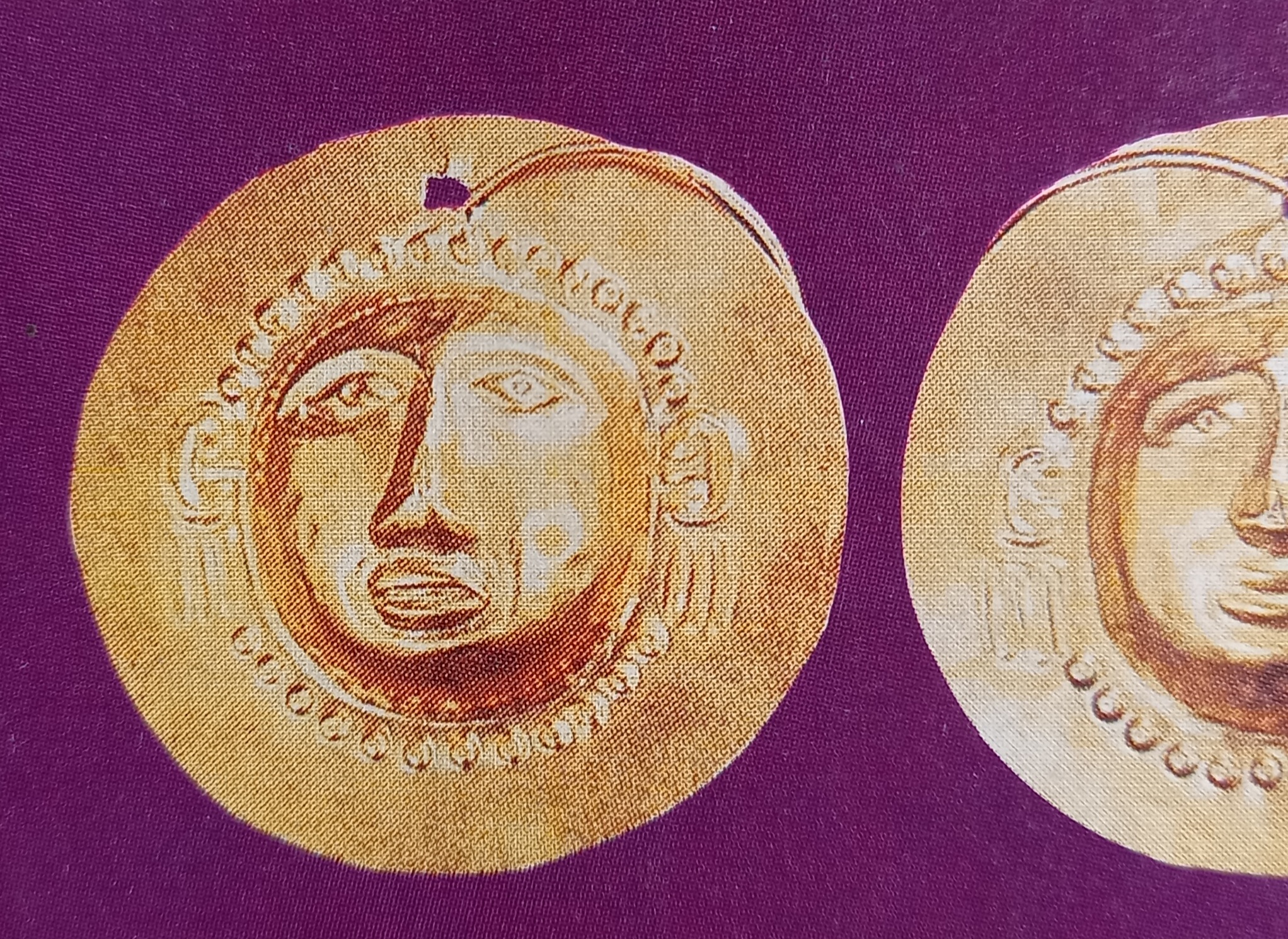
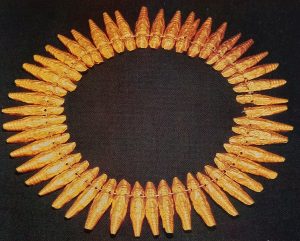
Gold earrings. Pre-Columbian treasure, Colombia.
Goranchacha reigned with intelligence and justice and built a temple devoted to his father the Sun. He wanted it to be luxurious, with the floor covered by quilts woven with the ceiba trees wool (3) and decorated with gold objects from the best Muisca and Quimbaya goldsmiths, with terracotta pieces from the Sinú people and enriched with enormous emeralds from the Muzos people. This temple was a pilgrimage centre and a collection of golden offerings.
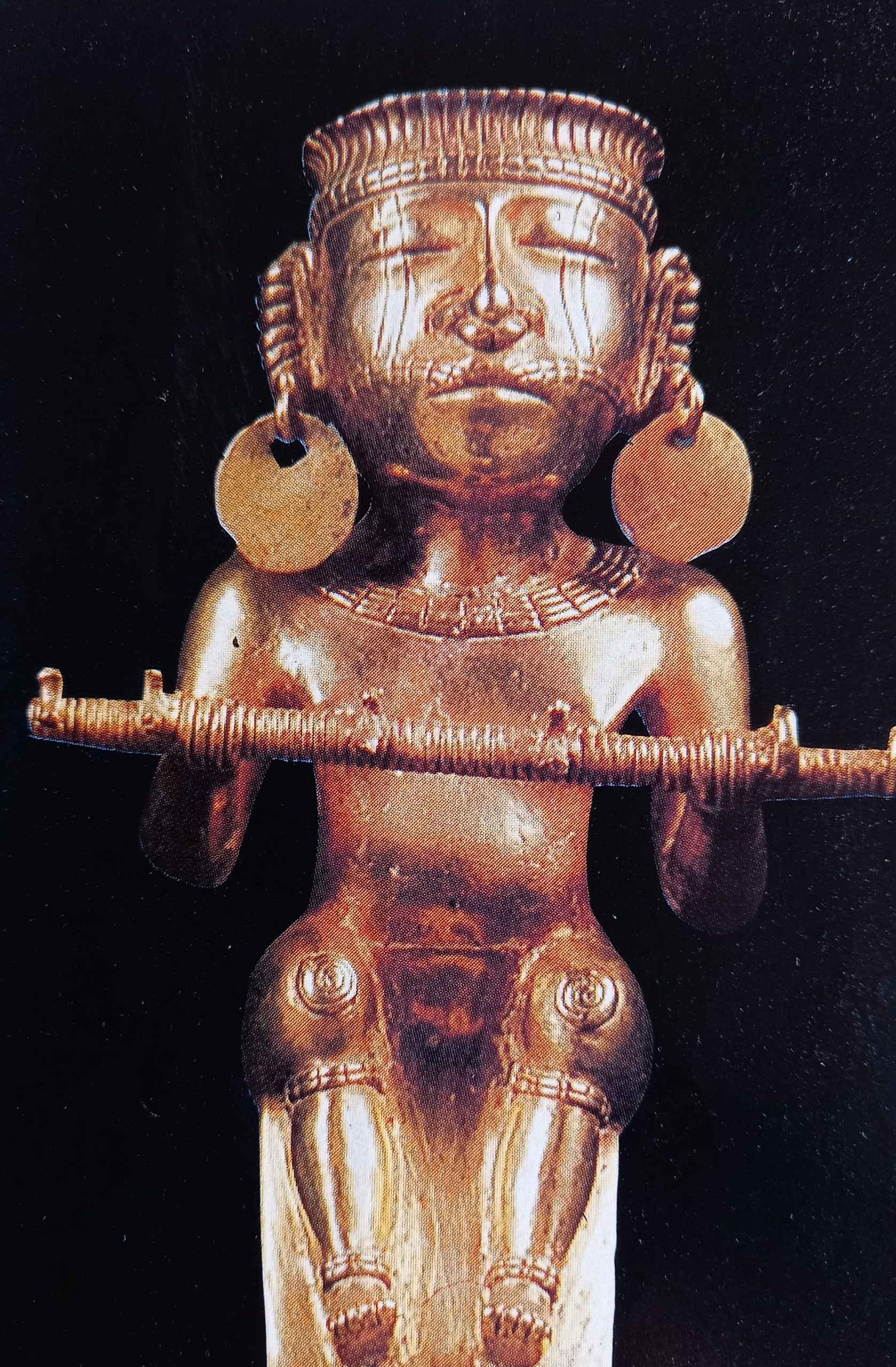
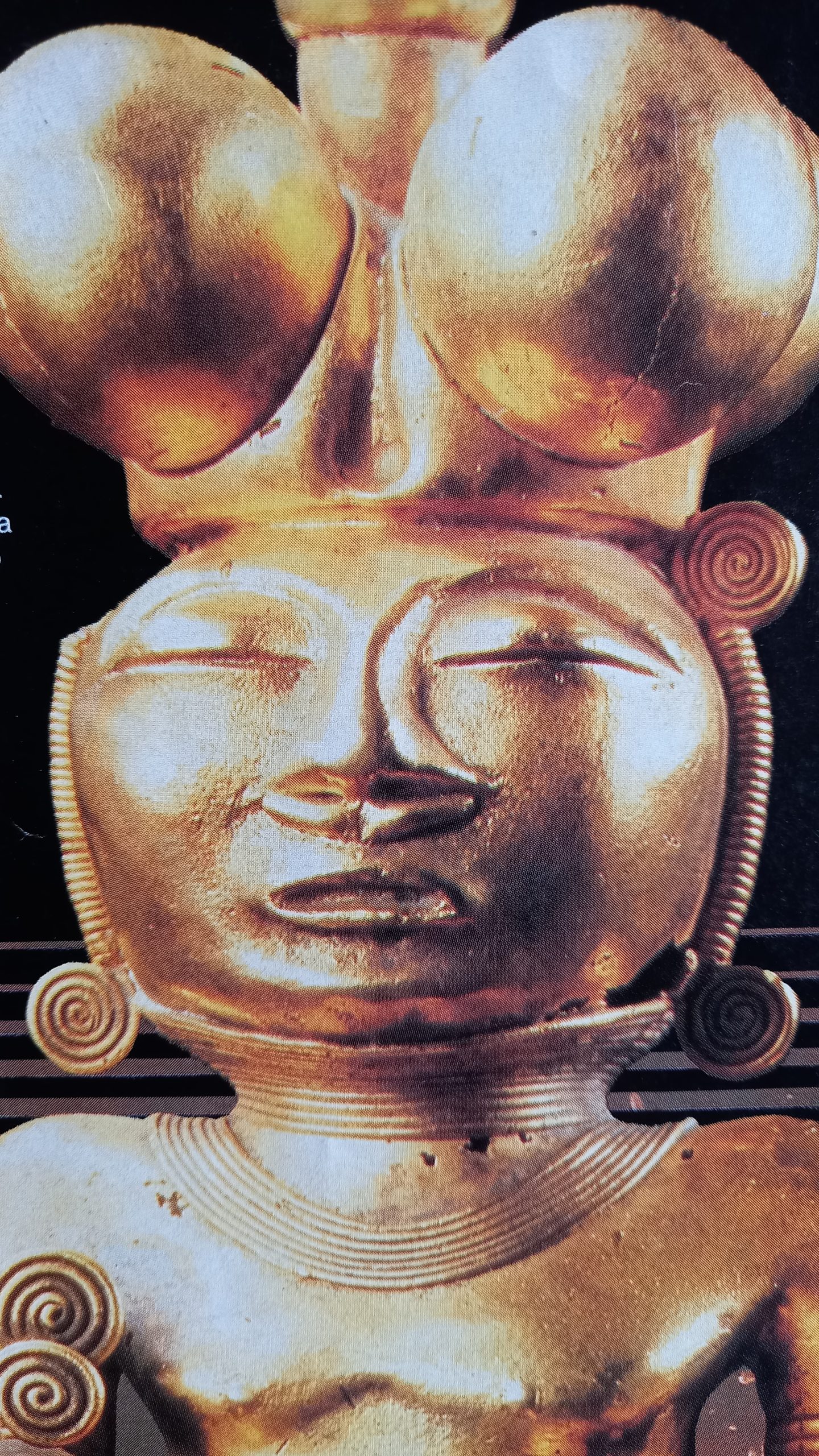
Detail of an anthropomorphic pectoral holding a sceptre.
Pre-Columbian treasure, Colombia.
At that time, Goranchacha learned that the conquistadors had arrived in the northern lands and that they would not stop until they reached his city.
They were strong, ferocious and armed men, looking for temples to be looted of their contents… The temple was then relocated to a hidden place of great natural attractiveness, not easily accessible (perhaps in a cave or a lagoon). Goranchacha, along with the entire population, abandoned the village and the temple, marching towards the southern lands. (4)
Somewhere in Latin America, among mountains and jungles that whisper secrets, gold keeps shining as an ancestral beacon. Even today, under the heat of a relentless sun, gold jewellery continues to be an undisputed symbol of identity, power and resistance.
Detail of “Poporo”, container with a female anthropomorphic figure. Pre-Columbian treasure, Colombia.
As far as the South American culture is concerned, gold is not just a metal, but also a soul that has spanned centuries and civilizations, a bond that connects the pre-Columbian to the modern, the African to the Spanish, the ancestral to the contemporary.
Gold is part of the Latin American DNA and has an inexplicable power, not so much of wealth, but of identity and personal expression. In my travels, I have seen that this appreciation is common to other cultures, such as the African and Indian ones.
What many do not know is that Indigenous Americans considered gold as a divine gift, with a sacred value comparable to the one attributed to maize and salt. Perhaps, for the conquistadors this splendour was only a promise of wealth.
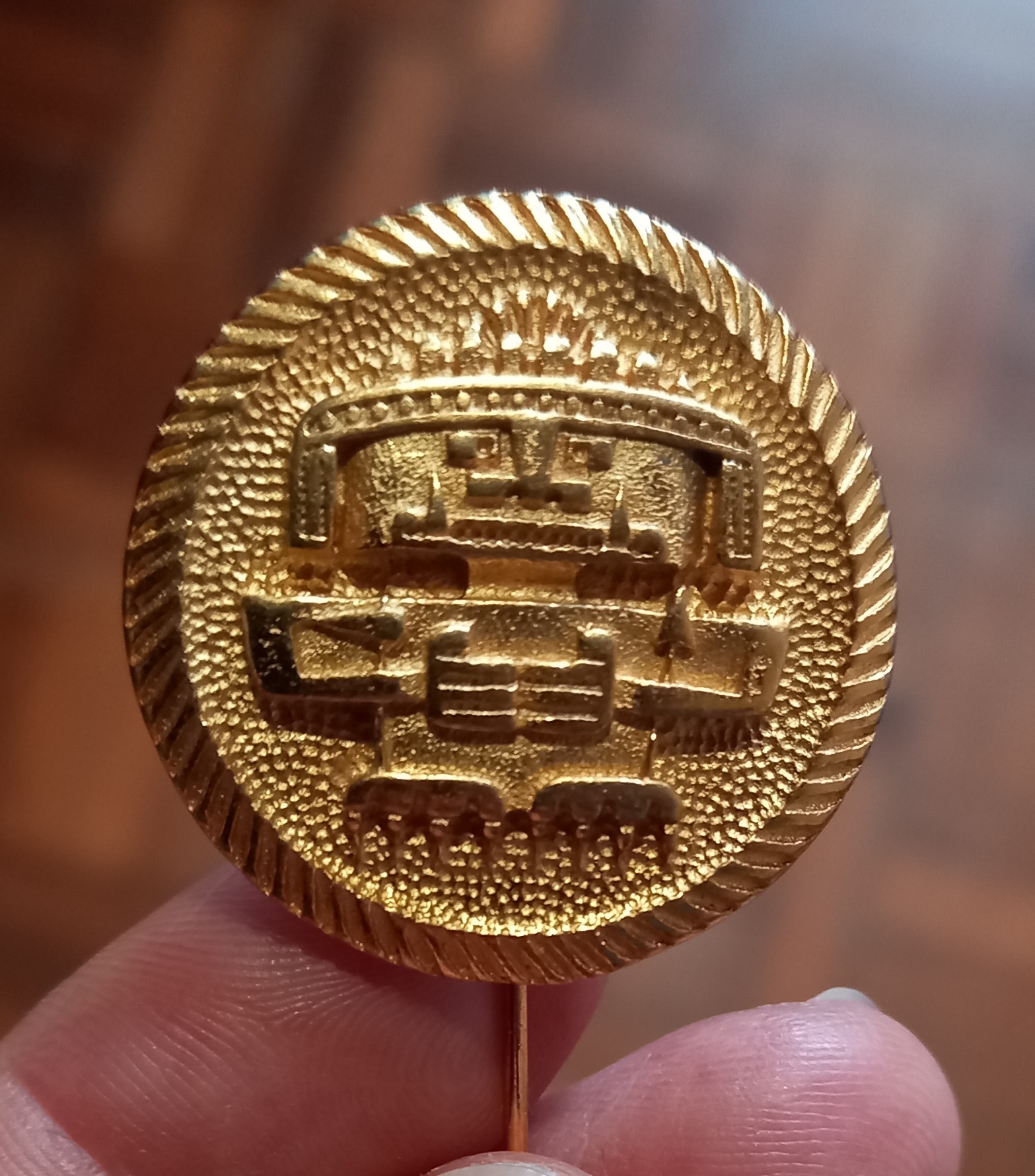
Gold brooche with warrior figure.
I remember it clearly, as if it were yesterday: there were 38 deg C outdoor, the tarmac was boiling, but in my grandmother’s house, it was cool. The December sea breeze entered from the patio and crossed all the rooms, exiting through front door, perennially open.
Dressed in white, she moved with infinite grace and sensuality. My grandmother stood out when she walked down the street. While she was looking for something in a mother-of-pearl chest, she told me: “My dear, a woman should never go out without a little gold”.
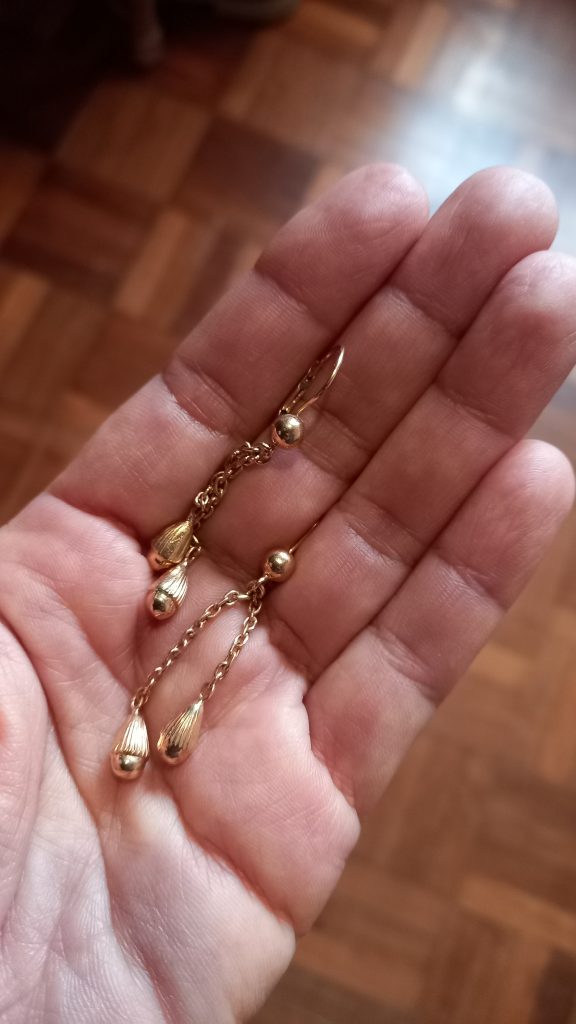
She found a pair of gold earrings; teardrop shaped, and placed them in a glass beaker, filling then it with a transparent green liquid. “You have to bless them, so that the devil doesn’t see you and your business goes well,” she told me.
Drops of gold from my grandmother.
In every corner of the history of my Andean maternal family, and of my Caribbean paternal family, gold jewellery stands as a testament to living stories, struggles and celebrations.
Jewellery passed down from generation to generation, with religious significance intermingled with elements of indigenous and African mythology, shamanism, magical powers, and the worship natural elements.
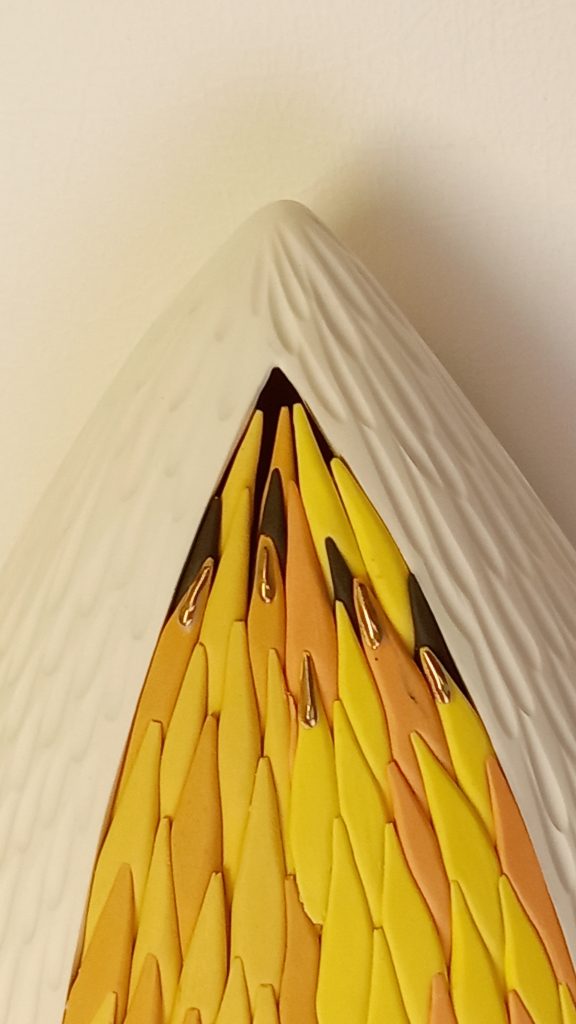
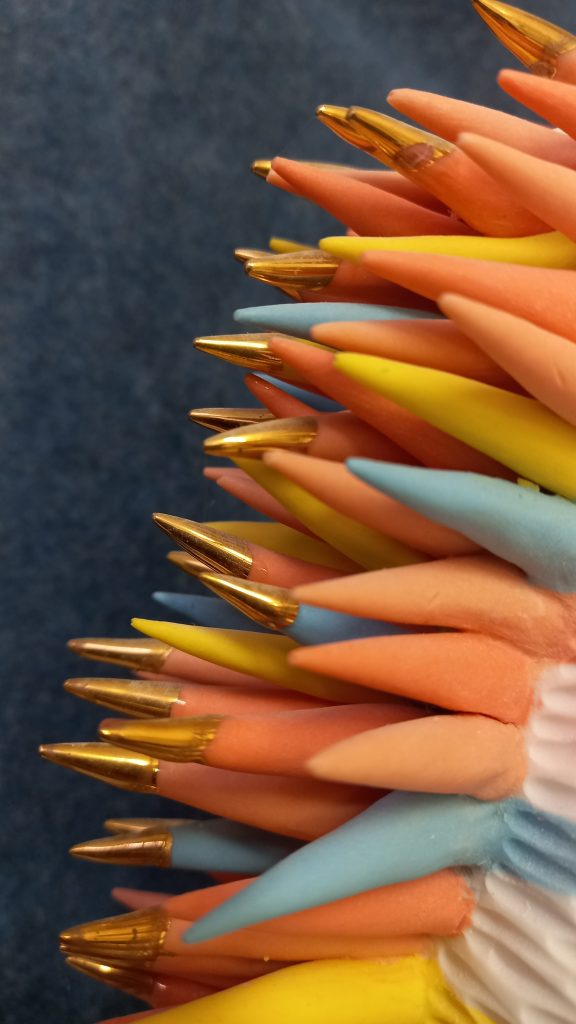
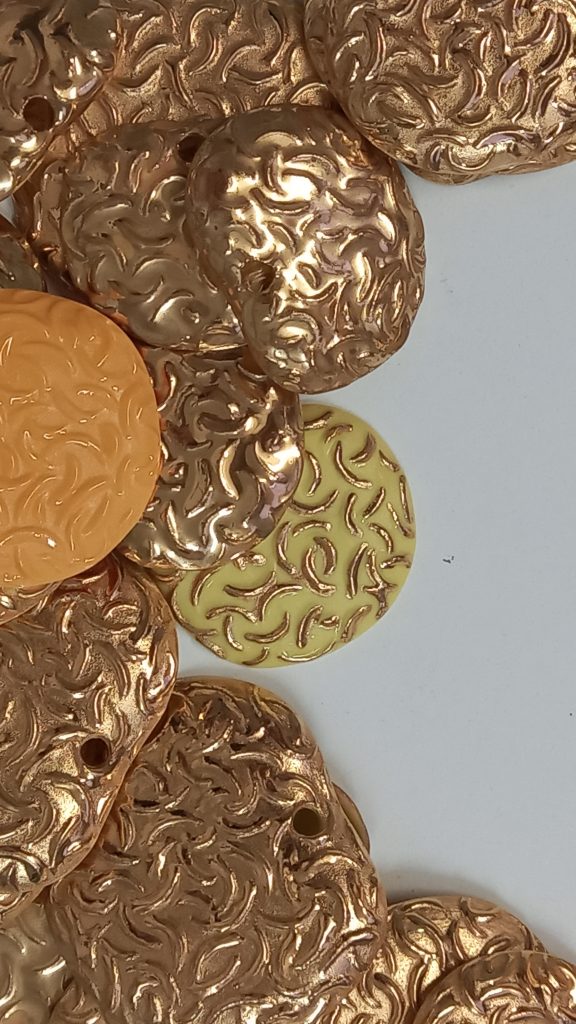
I use gold as if it were earth or water, depositing it in small quantities on my sculptures, as an ancient and sacred ornament. Gold is my link between past and present, the fusion between Europe and America.
OBJET OF SEDUCTION Series
Shiny, satin-finished, smooth or raw, gold becomes needle and flake. It is fragile and proud at the same time. My pieces with gold get close and move away from those wonders that disconcerted Albrecht Dürer and that he himself was not able to describe.
IMPOSSIBLE BOUQUET Series.
DEL PAIS DEL ORO Installation.
1. Excerpt written by Beatrice Buscaroli (Professor of Contemporary Art at the University of Bologna and curator of the Italian Pavilion at the Venice Biennale) for the presentation of the catalogue of my solo exhibition HILOS at the “Circolo degli artisti” gallery in Faenza, Italy.
2. Zipa: tribal chief of the Muisca people who inhabited the central Colombian highlands.
3. Vegetable wool that is obtained from the flowers of a giant tree called Ceibo.
4. Narration taken from Muisca mythology, perhaps one of the origins of the mystery of EL DORADO.
The Muiscas and Quimbayas were pre-Columbian Colombian populations who prospered between the 7th and the 11th centuries. Until the 11th century, they were named “Culturas doradas” for their wonderful goldsmith art. The Muzos are an indigenous population that lived in the central Colombian mountain range and were specialized in the craftsmanship of precious stones, especially emeralds. The Sinú people, on the other hand, inhabited the Caribbean plains and were experts in the production of sacred ceramics and goldsmithing.