For as long as I can remember, I’ve heard that technology was meant to make our lives easier. Today, Artificial Intelligence doesn’t just make things easier: it designs, predicts, writes, decides, and converses. And many artists are trembling, many feel displaced, even because of the difficulty they have using AI, more than because of the AI itself. In a conversation with fellow artists—sculptors, photographers, and painters—when I suggested using AI as an aid in my studio, my graphic design, and other areas, they all responded fearfully: “Well then, we won’t be needed anymore! Artists are destined to disappear!”
This conclusion hurt me. Not because of the technology itself, but because of what it revealed: the fear of losing their purpose, of being replaced, of the human element being left out of the equation, of the artist ceasing to be the creator.
So, to all my friends who work with art—whether artists, designers, gallery owners, art advisors, art administrators, historians, curators, etc.—before talking about AI; to AI deniers and those who venerate it as the only means of creation, thus stifling the spirit, I have asked, and have asked myself:
What part of this wonderful work are we passionate about? What makes us unique? What can’t the machine take from us?
Before writing this, I received a flood of happy and relaxed responses, which could be summarized in a few phrases:
The story behind each work
The emotion we evoke in other humans
The connection with other humans
AI can’t take our soul. The machine has no emotions, nostalgy, memories, not even tears or laughter that come from its heart—which heart? We, human beings, are communicating with other humans, we are dedicated to narrating, to evoking emotion, to connecting with other humans. Let’s redesign our roles to leave the mechanical to the machine, let’s free ourselves from some processes to focus on what’s essential: CREATING FOR OTHER HUMANS.
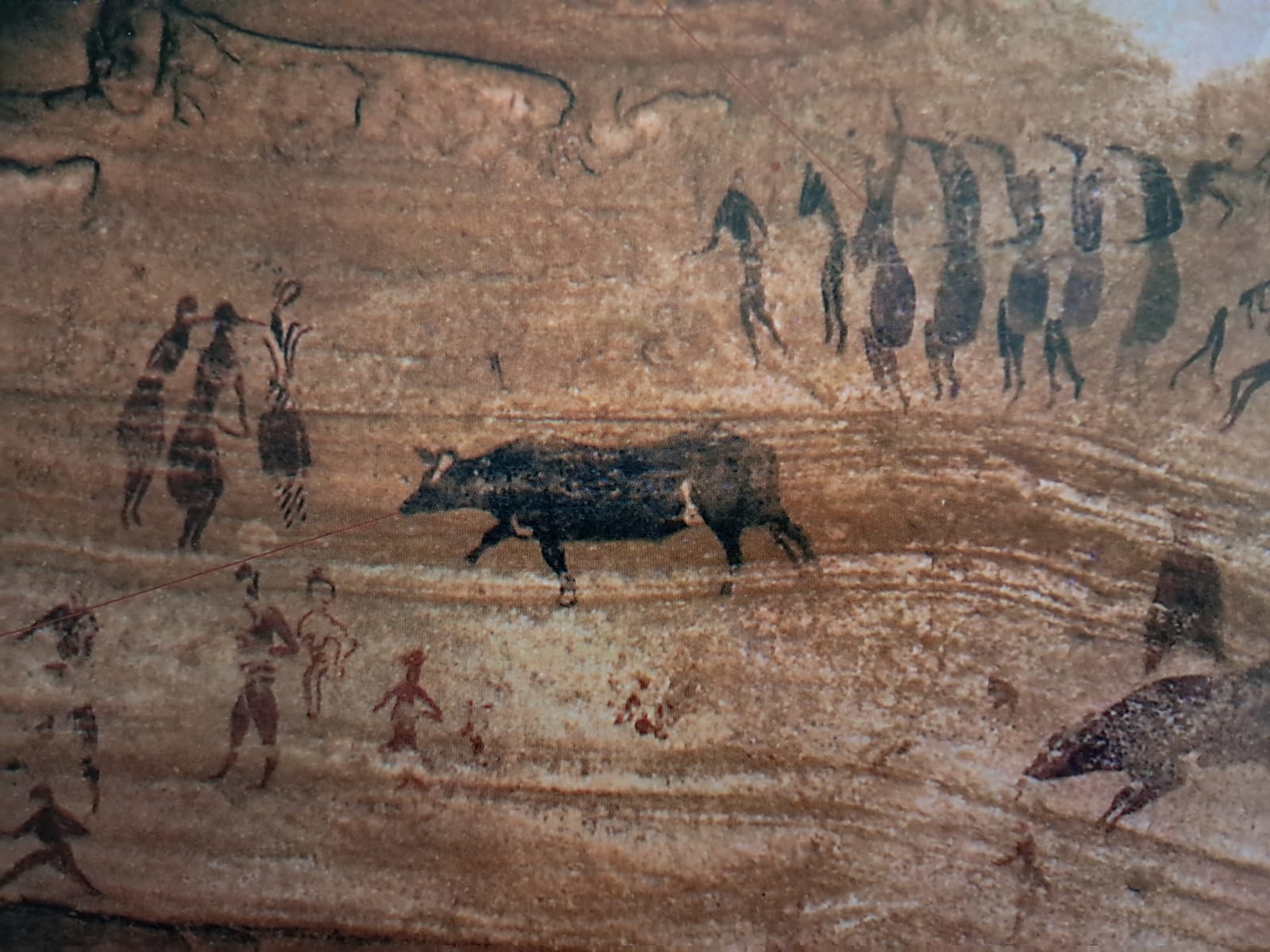
The cover photo: The Neolithic rock painting in Tassili, Sahara, is not merely the transmission of information by humans; it suggests anguish and a need to control nature. It reflects a desire for dominion through the graphic recording of an event.